Why You Have Stress Symptoms Even When You Don’t Feel Stressed (and What to Do)
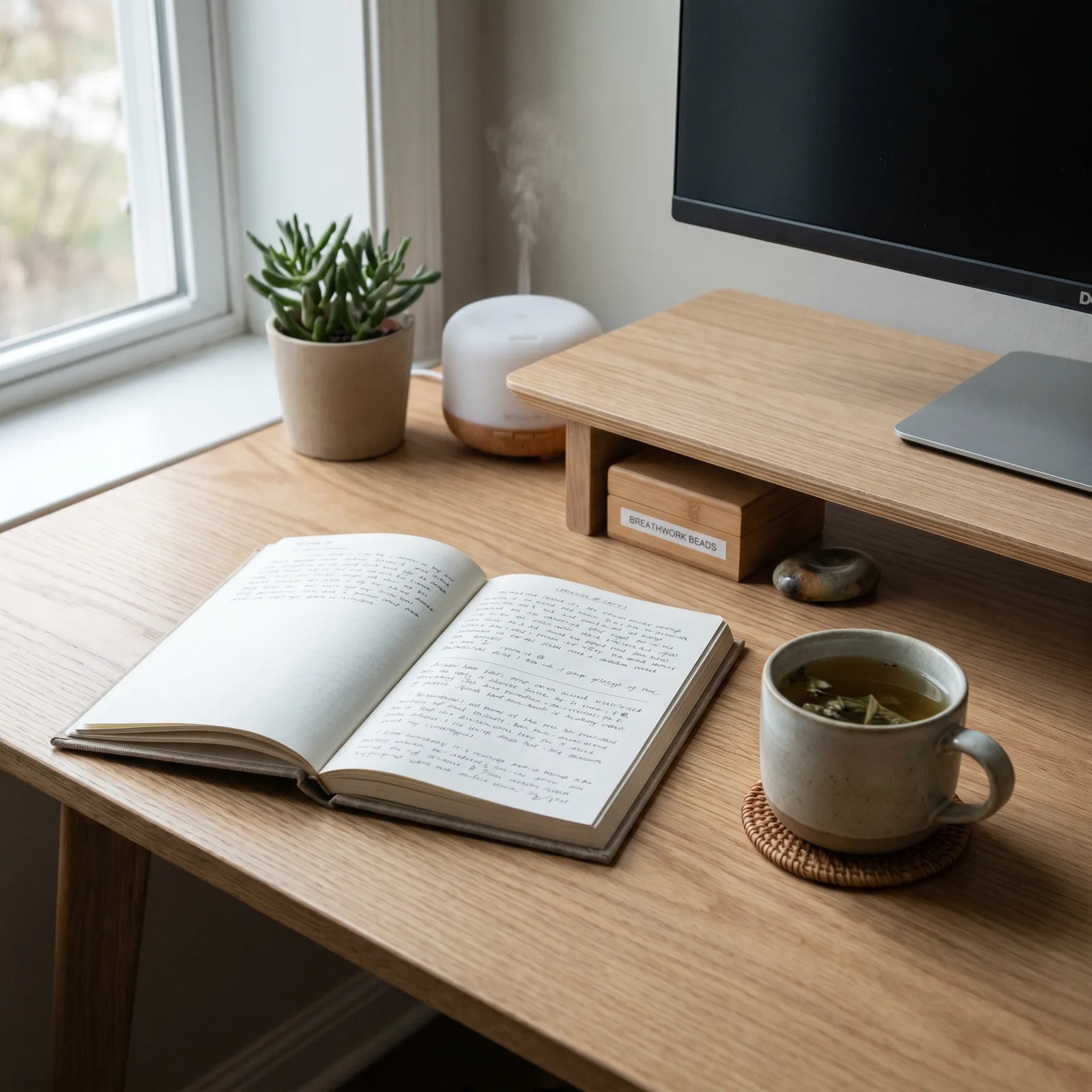
Sometimes your body feels stressed even when your mind insists everything is fine.
You might notice symptoms like fatigue, tension, restlessness, or difficulty focusing—but mentally, you don't feel "stressed" at all.
This can be confusing, but it's actually very common.
Here's what I've learned working with people who come to me confused by their own bodies: stress is not always a feeling. Sometimes it is a physical state stored in your body, entirely separate from your conscious awareness.
Why You Can Have Stress Without Feeling Stressed
Your nervous system responds to more than just conscious thoughts. It reacts to:
- Daily overload (even small things adding up)
- Constant phone or screen stimulation
- Lack of mental rest
- Emotional buildup you haven't processed
Over time, I've observed how easily the body can stay in a low-level "alert mode" even when you don't mentally notice it. The nervous system doesn't wait for your permission to activate—it responds to cumulative load, not just immediate threats.
This is why you can feel "fine" but still experience stress symptoms. Your mind has adapted to the background noise. Your body hasn't.
Common Signs of Hidden Stress
You might not feel stressed emotionally, but your body may show:
- Tight shoulders or jaw tension
- Fatigue without clear reason
- Restlessness or difficulty relaxing
- Brain fog or low focus
- Feeling "on edge" without knowing why
If these sound familiar, you're not broken. You're just carrying something your mind hasn't fully acknowledged yet.
1. Reset Your Body Before Your Mind
When I first started helping people with hidden stress, I assumed that if someone didn't *feel* stressed, they just needed to think differently. I was wrong.
If you don't "feel" stressed, thinking alone won't help much. You need to work with your body first—because that's where the stress actually lives.
Simple Physical Reset Actions
Try these small but powerful resets:
- Slow breathing (longer exhale than inhale—this directly stimulates the vagus nerve)
- Stretching your neck and shoulders
- Walking without your phone for a few minutes
These aren't just relaxing. They're signals to your nervous system that you're safe. And safety is the one thing a stressed body needs most.
2. Use Journaling to Detect Hidden Mental Load
Even if you don't feel stressed, your thoughts may still be carrying pressure in the background.
When I created my journaling resources, I noticed something important: most people don't know what they're carrying until they see it written down. The mind hides things from itself to protect you—but that protection becomes a burden over time.
Journaling helps reveal what your mind is holding unconsciously.
Prompts to Reveal Hidden Load
Try asking yourself:
- What has been on my mind lately?
- What small things have been draining me?
- What have I been ignoring or postponing?
This helps convert invisible stress into something you can see and release. And release is the goal—not just awareness.
Structured journaling can make this easier because it guides your thoughts instead of overwhelming you with a blank page. I designed my prompts specifically to help people bypass the "I don't know what to write" barrier, because that barrier itself is often a symptom of hidden stress.
3. Reduce Constant Mental Input
Even without emotional stress, your brain can become overloaded by constant stimulation.
I've seen this pattern repeatedly: people who are "fine" but exhausted. They're not depressed. They're not anxious. They're just *full*—full of input, full of notifications, full of noise.
Ways to Lower Stimulation
To give your brain a break:
- Take short breaks from social media
- Spend time doing one simple task at a time
- Allow moments of silence without input
This helps your nervous system shift out of "always processing" mode. Processing isn't the same as resting. And rest is what your system actually needs.
4. Use Calming Creative Activities to Release Tension
When stress is stored physically, calm repetitive activities help release it.
Examples of Calming Activities
Activities like coloring or simple creative focus can:
- Lower mental stimulation
- Help your body relax naturally
- Shift attention away from internal tension
This works because your brain moves from analysis to gentle focus, which supports relaxation. Analysis keeps stress alive. Gentle focus lets it dissolve.
In my experience, this is one of the most underused tools for stress release. We try to think our way out of stress. But sometimes the fastest path is to stop thinking and start doing something simple with our hands.
5. Build a Daily "Unloading Routine"
Hidden stress builds up when it has no exit point.
When I designed this approach, I noticed that the people who improved most weren't the ones who did the most—they were the ones who did something *consistently*.
A Sample Routine to Try
A simple daily rhythm could look like:
- 5 minutes journaling (mental unloading)
- 5–10 minutes calm creative activity (reset)
- Short walk or breathing reset
Consistency matters more than intensity. A small daily release is better than a big weekly purge. Your nervous system responds to rhythm, not effort.
Final Thought
You don't need to "feel stressed" for your body to need rest.
Stress can exist quietly in the background, showing up only as physical or mental fatigue. And that fatigue isn't a sign of weakness—it's a sign that your system has been working harder than you realized.
Once you learn to reset your body, unload your thoughts, and reduce constant stimulation, your system naturally returns to balance—even if you never labeled it as stress in the first place.
And that's the real insight: your body already knows how to find balance. It just needs you to create the conditions for it.
*You don't have to feel stressed to deserve rest.*