What to Do Instead of Mindlessly Scrolling Social Media (Simple Daily Alternatives)
In my experience working with creative professionals, overwhelmed parents, and even my own students, I've watched one habit silently drain more time and energy than almost anything else: the endless scroll. You pick up your phone for a quick break, and forty minutes later you're staring at a screen, feeling emptier than when you started. I've been there myself, and I've helped countless people gently step away from that loop.
When I first started observing my own screen habits, I noticed that the urge to scroll wasn't really about connection or information—it was about boredom, nervous energy, or the need for a quick dopamine hit. The problem is, the hit never lasts. So I designed a toolkit of simple, daily alternatives that don't require willpower, just a slight shift in attention. These are the strategies I share with my coaching clients, and they work because they're not about deprivation—they're about replacement.
The Scrolling Trap: What I See Happening
I've sat with dozens of people who tell me they want to reduce their screen time, yet they feel powerless against the pull of their feeds. The apps are engineered to keep you hooked, and I always remind my clients that it's not a personal failing—it's a design flaw. But the cost is real: lost sleep, increased anxiety, comparison fatigue, and the creeping sense that hours have vanished without anything to show for them.
What I found most telling in my own journey was that I didn't actually enjoy the scroll. I was just avoiding something else—discomfort, stillness, or even the simple question of what I actually wanted to do with my time. Once I named that, I started building a menu of alternatives that felt genuinely appealing, not like chores.
Why Passive Consumption Drains Us
The short answer is that scrolling is passive. You're receiving, not creating; reacting, not initiating. In my workshops, I often ask participants to rate their energy before and after a scrolling session. Almost everyone reports feeling more tired, more anxious, and less satisfied. That's because your brain is processing a firehose of information without any meaningful output to balance it.
I designed my alternative list specifically to flip that dynamic—to give you small, satisfying actions that produce a tangible result, calm your nervous system, or genuinely connect you with someone. These aren't grand resolutions; they're micro‑shifts that add up to a much better day.
Simple Daily Alternatives That Actually Work
The key, I've learned, is to have these alternatives ready before the urge to scroll strikes. I keep a small list pinned to my workspace, and I encourage my clients to do the same. Here are the ones that have made the biggest difference in my life and in theirs:
Pick Up a Tangible Medium
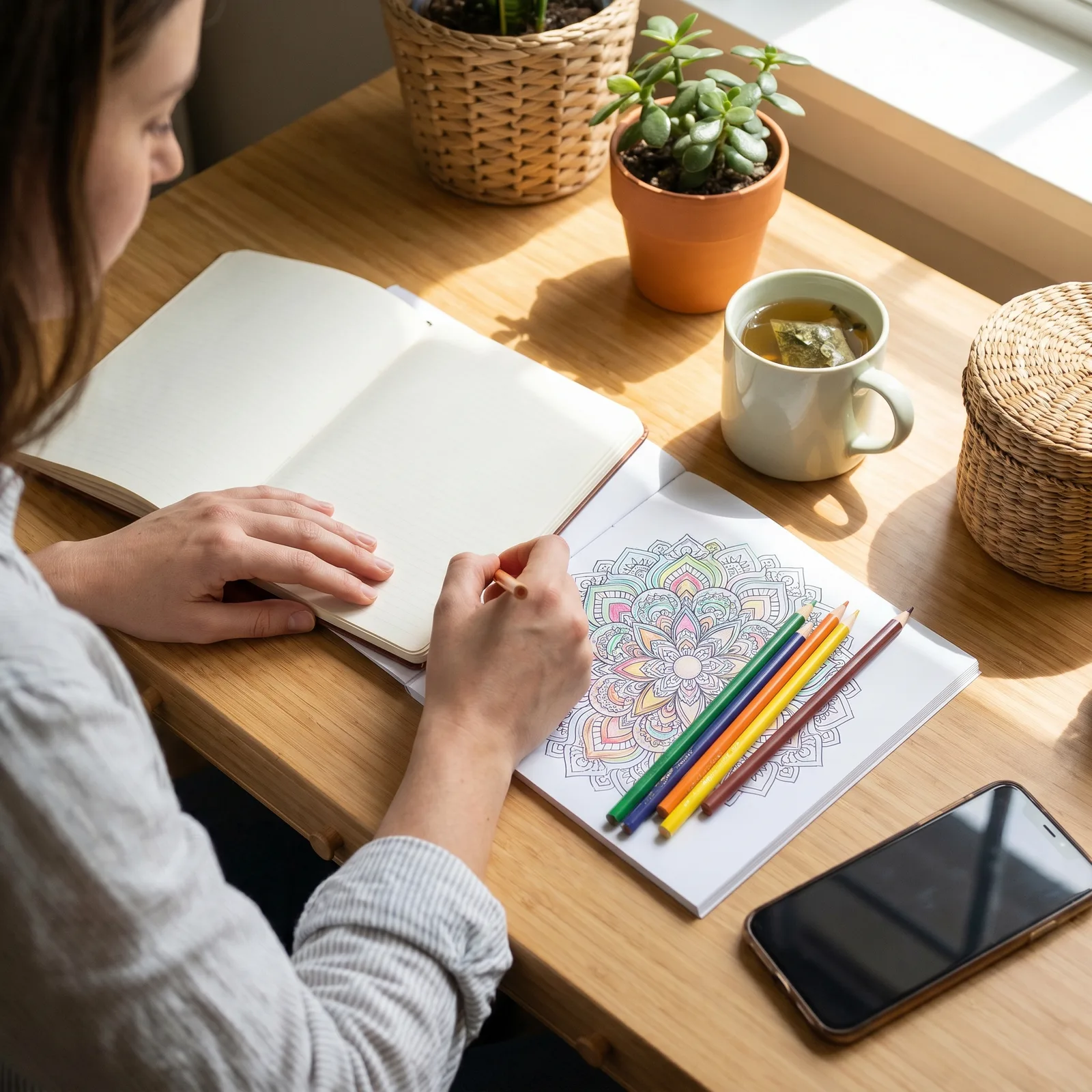
I specifically recommend keeping a small sketchbook, a journal, or even a set of wax pastels within arm's reach. When my hand instinctively reaches for my phone, I redirect it to a pencil or a brush. I noticed that the physical sensation of drawing or writing—the texture of paper, the resistance of a pen—immediately grounds me. You don't need to be an artist; scribbling a pattern, doodling a cloud, or writing three lines about your day is enough to break the scroll reflex.
Move Your Body, Gently
One of the simplest swaps I suggest is a two‑minute stretch or a slow walk around your room. I personally set a rule: if I want to open an app, I have to do ten standing stretches first. Nine times out of ten, after moving, I no longer want to scroll. The blood flow shifts my mood, and I've already completed a small, healthy action that feels better than any feed.
Dive Into a Physical Page
I always keep a physical book or magazine next to my phone. When I feel the pull of the digital void, I pick up the paper instead. Reading a few pages of a novel or a thoughtful essay engages a different part of my brain—the part that sustains attention rather than fragments it. My students often tell me they sleep better on nights they read before bed instead of scrolling.
Create Instead of Consume
This is the cornerstone of my approach. I ask my clients: what can you make in five minutes? A cup of tea with care. A short poem. A photo of a shadow on the wall. A quick playlist for a friend. A tidy corner of your desk. In my experience, the act of creating—even something tiny—flips the internal narrative from passive viewer to active participant. And that feeling is far more lasting than a viral video.
Connect With a Real Voice
I was guilty of using social media as a proxy for connection, but it never filled the need. So I designed a personal rule: if I want to check someone's profile, I text or call them instead. A three‑minute voice note to a friend, a quick call to my sister, or even a handwritten sticky note on my partner's mirror—these real interactions satisfy the social urge in a way that likes never can.
How I Designed My Environment to Support These Swaps
I learned that relying on willpower alone is a losing game. So I physically changed my space. I created a small "phone basket" in my entryway where I drop my device when I come home. I placed a sketchbook and a set of colored pens on my coffee table, right where I used to put my phone. I even moved my charging station out of my bedroom, so the first and last things I see are books and a glass of water.
These environmental nudges are what I recommend to everyone. When you make the desired activity easier and the undesired one slightly less automatic, you don't need to fight yourself all day. You just flow toward the better option.
Final Thoughts: The Shift From Passive to Active
What I've discovered over years of practicing and teaching this approach is that the goal isn't to eliminate social media entirely—it's to reclaim your agency. I still use apps, but I use them intentionally, for a specific purpose, and then I close them. The rest of my time belongs to the real world, to my own hands, to my own thoughts.
I encourage you to start small. Pick one alternative from this list and try it for three days. Notice how you feel after you draw, stretch, read, create, or call someone. I've watched that single swap transform people's evenings, their relationships, and their relationship with their own minds. The scroll will always be there; your attention is precious, and it's yours to spend wisely.
So the next time your thumb hovers over that app icon, pause for one breath and ask yourself: what could I do right now that would actually make me feel good an hour from now? The answer is almost never a feed. And that's a beautiful freedom to discover.